Sponsored article
Retention, Absorption and Drainage – How an Entrance Mat Manages Rainwater
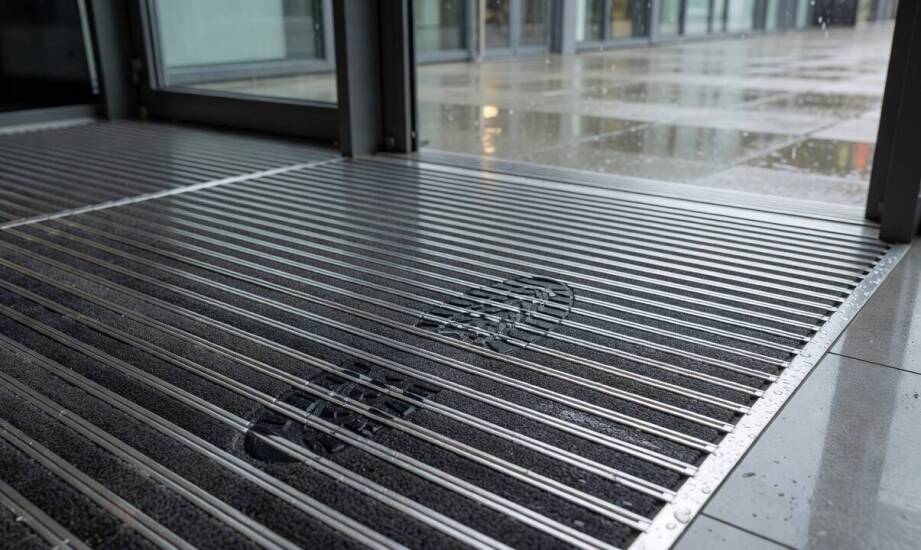
A heavy summer downpour quickly reveals how effectively an entrance mat handles water. One mat allows droplets to remain on the surface, another absorbs moisture into its structure, while a third directs excess water into drainage channels or collection spaces below. Building owners can immediately see whether the flooring beyond the entrance remains dry or whether puddles and slippery wet areas begin to appear. Effective water management is one of the primary functions of a properly designed entrance matting system.
Read more: Key Advantages of Branded Entrance Mats in Public Buildings
Three Ways Entrance Systems Manage Moisture
Modern entrance systems rely on three main mechanisms for handling water. Surface shedding uses smooth or grooved profiles that allow water to flow away without penetrating the material. Absorption takes place within textile fibres or dense polyamide pile, which can retain significant amounts of moisture within their structure. Controlled drainage, in turn, uses openings, channels and free spaces between aluminium profiles to direct excess water away from walking surfaces.
Many commercial facilities choose waterproof entrance mat solutions because robust systems with retention and drainage capabilities help manage substantial amounts of rainwater at busy entrances. In modern aluminium matting systems, water and dirt fall between the profiles, while the space beneath the mat acts as a temporary collection area until moisture evaporates or is drained away.
Material Performance During Long-Term Exposure to Moisture
Rubber used in outdoor open-grid and ring mats remains flexible and does not absorb water. Its open structure allows rainwater to drain directly to the surface below. High-quality rubber compounds offer resistance to deformation and long-term outdoor exposure, including rain, UV radiation and freezing temperatures. Brush inserts made from rigid synthetic fibres effectively scrape away mud and debris, while their open construction promotes moisture drainage.
Textile fibres made from polyamide or polypropylene can absorb considerable amounts of moisture per square metre while simultaneously trapping fine dirt particles carried indoors. These materials typically release moisture efficiently during natural drying, although prolonged saturation requires regular maintenance and cleaning. Aluminium entrance systems equipped with integrated inserts combine the durability of rigid support profiles with the moisture-management capabilities of textile materials.
Designs That Help Prevent Puddles
The open construction of aluminium profiles fitted with rubber spacers creates consistent gaps through which dirt, sand and water fall into the designated collection area beneath the mat. Where drainage systems are incorporated into the installation, excess water can be directed away from the entrance zone in a controlled manner. Aluminium borders and recessed frame systems help prevent dirty water from spreading across adjacent floor surfaces.
Solutions designed for high-traffic facilities often combine coarse brush inserts outdoors with absorptive textile inserts inside the building. This two-stage approach helps remove snow, mud and moisture before footwear reaches interior flooring. Deep aluminium wells with reinforced support structures can withstand demanding traffic loads, including material-handling equipment in certain commercial and industrial settings, while also accommodating drainage components where required.
As part of its manufacturing operations in Poznań, Unimat Fabryka Wycieraczek designs entrance systems and collection wells that combine effective dirt retention with controlled water management.
How Entrance Systems Respond to Rain and Melting Snow
Outdoor rubber mats and aluminium systems with integrated drainage remove rainwater continuously during precipitation. Melting snow and slush, however, can introduce significantly larger volumes of moisture within a short period. In these situations, the combination of a recessed frame and a deep collection well helps protect the entrance area from excessive water accumulation. Any remaining moisture carried indoors on footwear can then be captured by absorbent textile inserts located in vestibules and interior entrance zones.
Heavy pedestrian traffic in shopping centres, hotels and office buildings further increases the amount of moisture entering from outside. Routine maintenance and integrated drainage solutions help ensure that entrance systems remain effective throughout the day.
The Impact of Moisture on Safety and Floor Drying
Moisture that remains on mat surfaces or smooth flooring immediately beyond the entrance significantly increases the risk of slips and falls. Wet shoe soles reduce traction, while standing dirty water can contribute to unpleasant odours and hygiene issues. Effective drainage systems can significantly reduce drying times, helping maintain cleaner and safer circulation areas in commercial buildings.
Entrance systems equipped with durable rubber inserts help improve grip during wet weather. Interior mats featuring absorbent polyamide fibres efficiently capture residual moisture and help reduce the spread of wet footprints throughout the building.
Matching the System to Entrance Conditions
The best water-management strategy depends on several factors, including the degree of weather exposure, the possibility of integrating drainage infrastructure and the desired drying performance. Selecting properly matched cleaning materials and robust support structures helps maintain a consistently high standard of cleanliness. A planned division between exterior and interior cleaning zones helps minimise slip risks during challenging weather conditions and improves the overall efficiency of the entrance area.
Water at building entrances can be repelled, absorbed or directed into drainage channels and collection spaces beneath the mat.
Rubber, textile fibres and aluminium constructions respond differently to prolonged exposure to moisture.
Open structures, drainage gaps and collection wells help manage dirt and water without turning the mat itself into a storage reservoir.
Aluminium systems with drainage combine dirt collection with controlled water removal away from walking areas.
Rain, melting snow and moisture carried on footwear place different demands on entrance systems and require different retention strategies.
Long-term moisture increases slip hazards, prolongs drying time and makes cleaning more difficult.
The ideal solution depends on entrance exposure, drainage possibilities and the required drying performance.
FAQ
What is the difference between an absorbent mat and a waterproof entrance mat?
An absorbent mat retains water within its fibres and helps dry footwear, but it may not adequately manage large volumes of water during heavy rainfall. A waterproof entrance mat usually incorporates a structure that channels water away or directs it into a retention space. As a result, it offers better protection against puddles forming in the entrance area.
When is a draining entrance mat better than a non-draining model?
A mat with drainage is particularly beneficial where entrances are heavily exposed to rainfall, melting snow or intense pedestrian traffic. Drainage helps reduce water accumulation and lowers the risk of slips. It is especially useful in facilities where connection to a drainage system is technically possible.
Why does an open mat structure help after heavy rain?
An open structure allows water and debris to pass below the mat instead of remaining on the walking surface. This reduces puddle formation and helps maintain cleanliness around the entrance. At the same time, it promotes faster drying of the entire entrance system.
You might be interested

How Do Cup Shape and Teapot Capacity Affect Aroma, Temperature and the Drinking Experience?
Brewing and serving the same tea in a small teapot and a larger one can create a noticeably different experience. The ingredients may be identical, but the volume of liquid, the temperature of the vessel and the rate at which heat is lost all influence how the drink develops and how quickly it becom
Key Advantages of Branded Entrance Mats in Public Buildings
A professionally designed entrance area is much more than a visual business card of a building – it is a strategic element responsible for the comfort, safety, and hygiene of the entire space. In public buildings, where many people enter daily, even minor lapses in this area can lead to faster floor