Sponsored article
A Complete Set of Liturgical Vestments as One Whole – Why Individual Elements Should Not Be Judged Separately
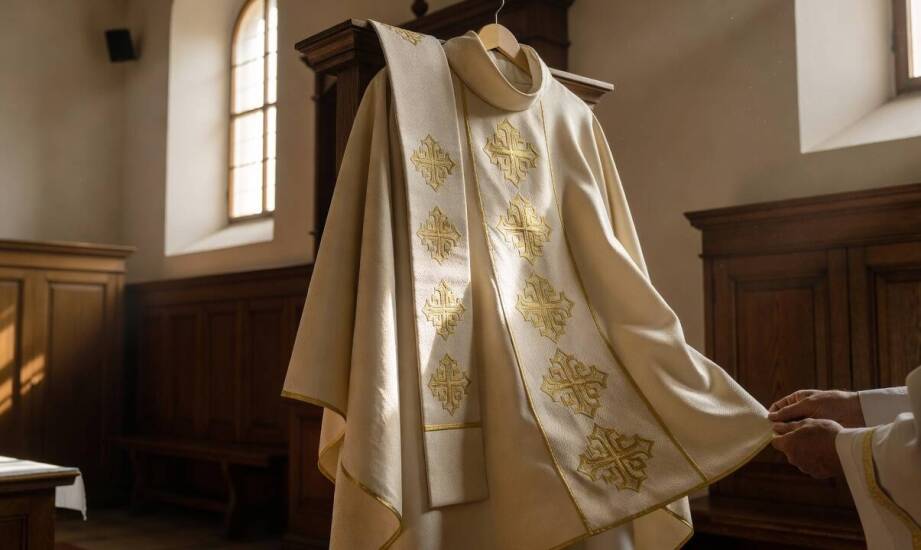
During the celebration of Holy Mass, the priest performs numerous gestures prescribed by the liturgy. Raising the chalice, extending the arms in the orans posture, incensing the altar, or walking in procession all require freedom of movement and natural fluidity. In these conditions, a complete set of vestments must maintain elegance, dignity, and a harmonious appearance regardless of movement. Achieving this effect requires treating each garment as part of a single system rather than as a collection of separate pieces.
Read more: The Variety of Chasuble Styles: What Does the Market Offer?
The visual appeal of an individual detail becomes secondary if it does not work in harmony with the rest of the ensemble. A well-designed set supports the celebrant during long ceremonies, while an unbalanced construction may restrict movement and lose its original shape after repeated washing, storage, or handling in the sacristy.
How Fabric and Cut Influence Freedom of Movement
Selecting the appropriate fabric is the foundation of a well-constructed vestment. The quality of an entire set depends on the interaction between fiber density, weave structure, and garment cut.
When a wide Gothic-style design is combined with a naturally flowing fabric, the vestment drapes freely during movement and naturally returns to its original form. Excessively stiff or overly heavy materials can negatively affect this effect.
Experienced liturgical tailors point out that medium-weight fabrics often provide the best balance between durability and graceful draping. Wool and carefully selected wool-polyester blends are known for their resistance to creasing. Cotton and linen offer excellent breathability, which can be particularly valuable during long celebrations in warmer seasons. Polyester is appreciated for its ease of care, although higher synthetic content may reduce airflow.
Individual pieces of clerical attire, including chasubles, copes, and accompanying accessories, should therefore be designed and evaluated as components of a unified whole.
The Hidden Details That Support Structure and Shape
Internal tailoring elements have a direct impact on how long vestments retain their formal appearance. Linings, carefully executed seams, and strategic reinforcements help distribute tension evenly across the outer fabric.
A quality lining can help prevent unwanted stretching and distortion of edges, which is especially important in larger Gothic and monastic-style vestments. Linings made from tightly woven cotton or smooth taffeta often serve as an internal support structure.
Tailors also reinforce the most demanding areas of the garment. Structural tapes and stabilizing components near collars and edges help reduce the risk of permanent deformation. Careful finishing protects fibers from separating as a result of folding, transportation, or regular cleaning.
Even premium fabrics such as silk or damask may lose their intended shape if not supported by a well-designed internal structure.
The Visual Consistency of Complete Vestment Collections
The category of liturgical vestments often includes coordinated sets that eliminate many of the compatibility issues associated with mixing items from different sources.
Combining garments purchased separately can result in visible differences in shades of white, fabric texture, or embroidery style. These discrepancies may become particularly noticeable under artificial church lighting.
Ars Sacra offers coordinated collections in Gothic, Roman, and semi-Gothic styles, with particular attention given to visual harmony across the entire set.
Machine embroidery and carefully positioned decorative elements contribute to the readability of Eucharistic symbolism from different viewing distances. Symmetrical arrangements should remain visually balanced both for worshipers seated in distant pews and for those standing nearby.
Matching colors, embroidery motifs, and fabric characteristics within a single collection helps prevent visual inconsistency between the chasuble, stole, cope hood, and other coordinated elements. Such consistency also helps maintain order within the sacristy by providing complete, ready-to-use sets.
Adapting Vestments to Different Ministry Environments
The conditions of pastoral ministry often determine which features are most important in liturgical garments.
In a typical parish environment, durability and ease of maintenance are often top priorities, as vestments are used regularly and must withstand frequent handling and cleaning.
Monastic communities may place greater emphasis on simplicity and thermal comfort during extended periods of prayer and choir offices. Missionary settings often require a different approach altogether.
In hot and humid climates, lightweight fabrics and materials less prone to retaining moisture can offer practical advantages. Portability also becomes important, as vestments may need to be transported over long distances without damaging embroidery or delicate fabric structures.
Each environment presents unique demands, making it important to evaluate an entire vestment set based on its intended use rather than the appearance of individual components.
Reliability Begins with the Design
The functionality of liturgical clothing depends on how effectively all of its elements work together. Cut, fabric selection, lining construction, and embroidery placement contribute to the overall performance of the garment.
Well-balanced proportions support natural movement, help maintain fabric stability during storage, and preserve the clarity of religious symbolism. Looking at vestments as a complete system rather than focusing solely on decorative details can contribute to greater longevity and practicality.
This holistic approach helps ensure that liturgical garments remain functional, visually coherent, and suitable for regular use while allowing clergy to focus on the celebration itself rather than on their attire.
A complete set of liturgical vestments should provide dignity, comfort, and freedom of movement during celebrations.
The quality of a vestment set depends on the interaction of cut, fabric, and finishing rather than the appearance of a single element.
Fabric choice affects weight, breathability, wrinkle resistance, and shape retention.
Linings, seams, and reinforcements help stabilize the garment and reduce wear caused by regular use.
Embroidery and decorative elements should support visual balance, symbolism, and consistency throughout the ensemble.
Parish, monastic, and missionary settings each place different demands on liturgical clothing.
The most effective vestment sets remain functional, visually harmonious, and durable over time.
FAQ
Why should liturgical vestments be evaluated as one system rather than as separate pieces?
The interaction between all components is what determines comfort, appearance, and durability. An attractive embroidery design or high-quality fabric alone is not enough if the cut, lining, and construction do not work together. In practice, the entire set must maintain its shape during movement, storage, and regular use.
Which fabric characteristics have the greatest impact on comfort?
The most important factors are fabric weight, breathability, and the ability to drape naturally. Lightweight and breathable materials can improve comfort during long celebrations, while more resilient blends often withstand creasing and repeated folding more effectively.
What makes a complete set of liturgical vestments look harmonious?
Consistent colors, matching embroidery motifs, and complementary fabric structures are the key factors. The placement of decorative elements should also be balanced so that the vestments appear proportional both up close and from a distance. This consistency minimizes visual differences between individual pieces of the set.
You might be interested
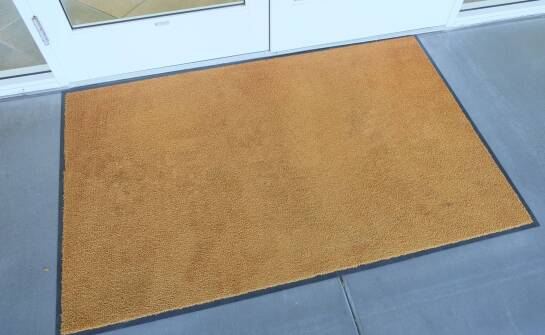
Key Advantages of Branded Entrance Mats in Public Buildings
A professionally designed entrance area is much more than a visual business card of a building – it is a strategic element responsible for the comfort, safety, and hygiene of the entire space. In public buildings, where many people enter daily, even minor lapses in this area can lead to faster floor

How ceramic mugs can enrich your pottery collection?
Handmade ceramics with unique patterns are gaining popularity among fans of applied art. Ceramic mugs, as part of this tradition, offer not only functionality but also aesthetics. This article explores how these mugs enhance a pottery collection, combining tradition with modern style.Read more: Cera